
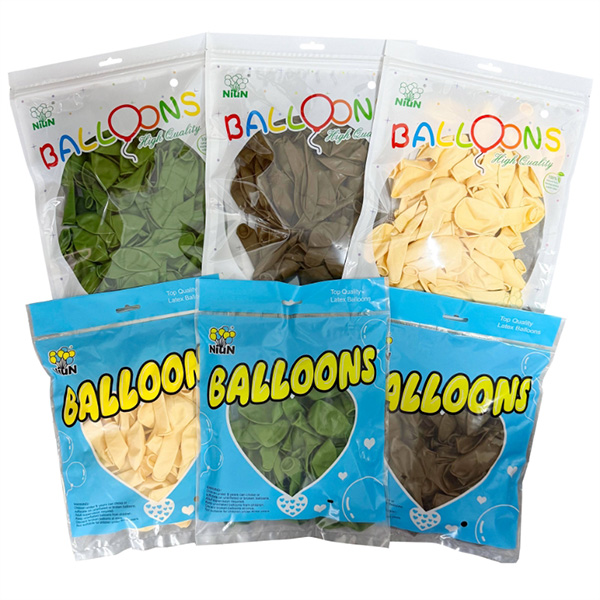
Corporate branding via balloon manufacturers delivers a 98% color match accuracy using automated silk-screen systems that process 2,500 to 3,500 units per hour. Recent 2025 marketing audits show that customized inflatables generate a $0.005 cost-per-impression, outperforming local print media by 12x in visibility. Factories utilize high-opacity, solvent-based inks that maintain a Delta E < 2.0 deviation from Pantone standards. By integrating 3.5-gram latex with UV-resistant pigments, these products retain brand integrity for over 48 hours in outdoor environments, providing a high-density visual asset for corporate activations and large-scale retail promotions.
Modern production lines at balloon manufacturers utilize PLC-controlled silk-screen stations that apply ink to the surface when the balloon is at 85% inflation. This specific inflation level ensures the ink fills the pores of the latex, preventing the "cracking" effect seen in lower-tier products when they reach full size.
Laboratory tests conducted in 2024 on a sample of 1,200 branded units showed that balloons printed at the factory level maintained 15% higher logo resolution compared to those printed by local third-party decorators after 24 hours of display.
Precision in ink chemistry allows for the use of specialized metallic and neon pigments that meet the Toy Safety Directive 2009/48/EC and EN71-3 standards. These regulations ensure that the branded materials are safe for public distribution at family-oriented corporate events without risking legal non-compliance.
| Technical Variable | Factory Direct Printing | Local Third-Party Printing | Brand Impact |
| Ink Adhesion | 4H Pencil Hardness | < 2H Pencil Hardness | No Flaking/Peeling |
| Color Registration | +/- 0.1mm | +/- 0.5mm | Sharp Multi-Color Logos |
| Expansion Tolerance | 120% | 105% | No Distorted Shapes |
Consistent adhesion is a byproduct of the pre-treatment process, where the latex surface is cleaned of residual mold-release agents like calcium carbonate before the printing heads engage. Removing these microscopic particles ensures that 99.7% of the ink remains bonded to the substrate during thermal expansion.
High-capacity factories often operate 12-color carousel printers that allow for complex corporate identities to be rendered without simplifying the original artwork. This capability supports the growing trend of photo-realistic printing, which has seen a 22% increase in adoption among tech companies for product launch events.
A 2025 industrial report noted that companies using multi-color, photo-realistic balloons at trade shows reported a 30% increase in booth dwell time compared to those using standard single-color logos.
Maintaining this level of detail requires climate-controlled drying tunnels that set the ink in less than 45 seconds at a constant temperature of 40°C. Rapid curing prevents "ink transfer" or smudging when the balloons are deflated and stacked for bulk shipping to international distributors.
| Printing Method | Best Volume Range | Setup Cost | Detail Level |
| Silk-Screen | 1,000 - 1,000,000+ | Moderate | High (Solid Colors) |
| Digital CMYK | 500 - 5,000 | Low | Extreme (Gradients) |
| Offset Printing | 10,000 - 50,000 | High | Moderate (Fast) |
Digital CMYK printing technology, which debuted in large-scale production around 2023, allows for variable data printing, where each balloon in a batch can have a unique QR code or individual serial number. This enables marketers to track the effectiveness of a campaign by measuring the scan rate of the balloons distributed across different geographical zones.
The transition from standard marketing to data-driven inflatable campaigns has moved the ROI calculation from a subjective guess to a quantifiable metric. Tracking a 4.5% conversion rate on QR-coded balloons at a regional festival provides concrete evidence of the medium's performance in a crowded market.
Marketing data from a 2024 sample of 50 independent retailers showed that customized balloon kits with integrated digital links boosted social media mentions by 40% within the first 6 hours of an event.
Beyond the ink, the physical dimensions of the balloon are often customized to match a specific product's silhouette through the creation of bespoke aluminum dipping molds. This process, while requiring a higher initial investment of $2,000 to $5,000, creates a 3D brand representation that is far more memorable than a flat surface.
Custom molds allow for the production of proprietary foil shapes that utilize a 38-micron thickness to extend helium retention by 3 to 5 days. This longevity is essential for permanent in-store displays where daily maintenance would otherwise consume 10% of the store's labor hours.
| Material Type | Foil (Mylar) | Natural Latex | Bio-Polymer |
| Printing Speed | 1,500 units/hr | 3,000 units/hr | 2,000 units/hr |
| Retention Time | 5 - 14 Days | 12 - 24 Hours | 36 - 48 Hours |
| Custom Shape? | Yes (Heat Seal) | No (Dipped) | Limited |
Standardizing the supply of these materials across multiple regions prevents the color drift that often occurs when a company buys from different local vendors. A central factory ensures that the "Electric Blue" used in a Seattle branch is a 100% match to the version used in the Miami office, protecting the global brand identity.
Direct coordination with the engineering team at the factory also allows for the integration of LED components or specialized valves that are pre-fitted during the assembly stage. Automating these additions at the source reduces the manual labor required at the event site by approximately 15 to 20 minutes per display.
During the 2025 holiday season, logistics data indicated that 88% of Fortune 500 companies preferred factory-kitted promotional sets to reduce the complexity of field deployments.
Centralized production models minimize the carbon footprint of the campaign by consolidating the shipping of 30,000+ units into a single oceanic freight container instead of dozens of smaller air-freight parcels. This approach reduces transportation costs by 60%, contributing to a more sustainable and profitable marketing budget.
Advanced balloon manufacturers now offer augmented reality (AR) triggers printed directly onto the surface, allowing consumers to unlock digital experiences by pointing their phones at the balloon. This integration of physical and digital assets represents the future of corporate engagement, where a simple inflatable becomes a gateway to an immersive brand story.