
 Large-scale and integrated architectural design have become the standard for luxury residences and commercial spaces. Thanks to advancements in high-strength composite materials and distributed motor drive systems, the width of a single motorized sunshade can exceed 8 meters, and its height can reach 15 meters, with a surface flatness deviation of no more than 2 millimeters per meter. These projects are typically designed concurrently with the building's curtain wall, with the sunshade system pre-installed within the curtain wall unit, achieving wind pressure resistance up to the highest national standard level 9 (≥5.0 kPa). For example, a hotel in Dubai has installed a synchronized, in-custom shading system on its 12-meter-high glass curtain wall in lobby, reducing solar heat gain by up to 65% daily, equivalent to saving 30% on the area's air conditioning system's electricity.
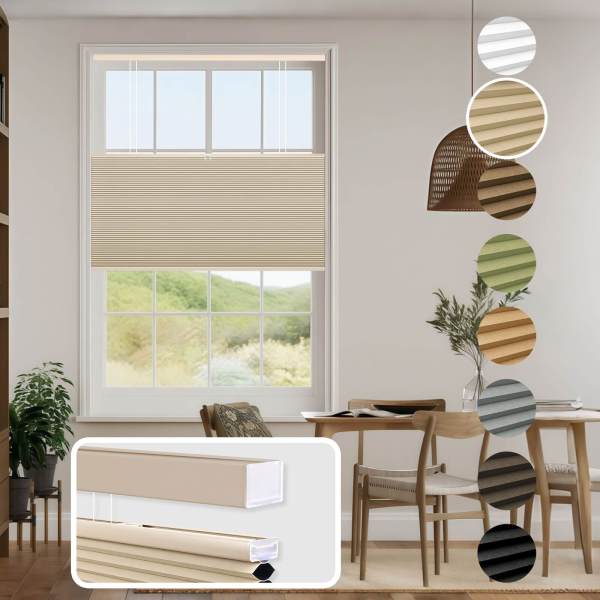
The application of digital twin and virtual reality technologies in the customization process has reduced decision-making error rates by 90%. Customers no longer rely on abstract fabric samples to imagine the effect; instead, they can immerse themselves in VR devices to experience the realistic appearance of different fabrics and colors (supporting over 2000 colors from the Pantone color chart) on their windows at different times of day (simulating the light angles at 10 am and 3 pm). The system can even simulate the dynamic drape of the fabric (based on precise weight and drape coefficient calculations), allowing customers to preview the final effect with 98% accuracy before installation, completely transforming the consumer experience of customized window coverings.
These trends all point to a future where window coverings will act as dynamic, responsive architectural skin cells, continuously interacting with the environment and residents. Choosing "in custom" means choosing to participate in this data-driven design revolution, transforming every window into a precise instrument for enhancing aesthetics, comfort, and energy efficiency.
Large-scale and integrated architectural design have become the standard for luxury residences and commercial spaces. Thanks to advancements in high-strength composite materials and distributed motor drive systems, the width of a single motorized sunshade can exceed 8 meters, and its height can reach 15 meters, with a surface flatness deviation of no more than 2 millimeters per meter. These projects are typically designed concurrently with the building's curtain wall, with the sunshade system pre-installed within the curtain wall unit, achieving wind pressure resistance up to the highest national standard level 9 (≥5.0 kPa). For example, a hotel in Dubai has installed a synchronized, in-custom shading system on its 12-meter-high glass curtain wall in lobby, reducing solar heat gain by up to 65% daily, equivalent to saving 30% on the area's air conditioning system's electricity.
The application of digital twin and virtual reality technologies in the customization process has reduced decision-making error rates by 90%. Customers no longer rely on abstract fabric samples to imagine the effect; instead, they can immerse themselves in VR devices to experience the realistic appearance of different fabrics and colors (supporting over 2000 colors from the Pantone color chart) on their windows at different times of day (simulating the light angles at 10 am and 3 pm). The system can even simulate the dynamic drape of the fabric (based on precise weight and drape coefficient calculations), allowing customers to preview the final effect with 98% accuracy before installation, completely transforming the consumer experience of customized window coverings.
These trends all point to a future where window coverings will act as dynamic, responsive architectural skin cells, continuously interacting with the environment and residents. Choosing "in custom" means choosing to participate in this data-driven design revolution, transforming every window into a precise instrument for enhancing aesthetics, comfort, and energy efficiency.
What are the latest design trends in custom window treatments?
Today's customized window coverings have evolved from simple light-blocking tools into composite interfaces integrating materials science, intelligent algorithms, and spatial aesthetics. The core of the latest trend lies in achieving highly personalized sensory experiences and performance optimization through precise technical parameters, with several areas showing particularly strong performance.
The adoption of environmentally friendly and bio-based materials is becoming mainstream at an annual growth rate exceeding 30%. This is not just a concept, but a quantifiable choice. For example, leading customized roller blind fabrics on the market already use recycled polyester fibers in over 20% of their series, with up to 60% of their raw materials being recycled ocean plastics or post-consumer plastic bottles. These fabrics also achieve 99% UV blocking and over 50,000 abrasion resistance tests, but with a carbon footprint approximately 35% lower than traditional petroleum-based fabrics. Even more cutting-edge, bio-based synthetic materials extracted from mycelium or plant cellulose are entering the in-custom field. These materials possess natural moisture-regulating capabilities, stabilizing ambient humidity fluctuations within ±5% within 24 hours, while also being fully biodegradable.
Technological fabrics and dynamic optical control are redefining comfort. Traditional light-adjustable curtains may only have two states: "light transmission" and "light blocking." However, the latest photochromic or thermochromic fabrics can dynamically change their light transmittance in real time based on UV intensity (W/m²) or ambient temperature (°C), fluctuating between 15% and 80%, all without the need for electricity. Another trend is integrated microporous matrix fabrics, which, through precision laser engraving, achieve up to 70% outward visibility while maintaining 85% privacy, perfectly resolving the conflict between light blocking and views in street-facing rooms. According to data from the 2024 International Window Decoration Exhibition, fabrics with such intelligent responsive characteristics have seen their adoption rate in high-end in-custom projects climb to 40%.
The deepening of minimalism is reflected in "hidden intelligence" and "disappearing hardware." Motor noise levels have been reduced from the typical 40 decibels to below 25 decibels, with operating sound pressure levels lower than ambient background noise. Power lines are cleverly integrated into the window frame or powered via solar thin films, achieving a photoelectric conversion efficiency of 18%, supporting multiple lifting cycles with just 4 hours of sunlight per day. The thickness of the track and roller blind casing has been reduced to an unprecedented 22 millimeters, minimizing their visual presence by 60% and almost seamlessly integrating them with the window structure. This pursuit of millimeter-level detail results in a clean visual plane when closed and completely "disappearing" when open—the essence of top-tier in-custom design.
Large-scale and integrated architectural design have become the standard for luxury residences and commercial spaces. Thanks to advancements in high-strength composite materials and distributed motor drive systems, the width of a single motorized sunshade can exceed 8 meters, and its height can reach 15 meters, with a surface flatness deviation of no more than 2 millimeters per meter. These projects are typically designed concurrently with the building's curtain wall, with the sunshade system pre-installed within the curtain wall unit, achieving wind pressure resistance up to the highest national standard level 9 (≥5.0 kPa). For example, a hotel in Dubai has installed a synchronized, in-custom shading system on its 12-meter-high glass curtain wall in lobby, reducing solar heat gain by up to 65% daily, equivalent to saving 30% on the area's air conditioning system's electricity.
The application of digital twin and virtual reality technologies in the customization process has reduced decision-making error rates by 90%. Customers no longer rely on abstract fabric samples to imagine the effect; instead, they can immerse themselves in VR devices to experience the realistic appearance of different fabrics and colors (supporting over 2000 colors from the Pantone color chart) on their windows at different times of day (simulating the light angles at 10 am and 3 pm). The system can even simulate the dynamic drape of the fabric (based on precise weight and drape coefficient calculations), allowing customers to preview the final effect with 98% accuracy before installation, completely transforming the consumer experience of customized window coverings.
These trends all point to a future where window coverings will act as dynamic, responsive architectural skin cells, continuously interacting with the environment and residents. Choosing "in custom" means choosing to participate in this data-driven design revolution, transforming every window into a precise instrument for enhancing aesthetics, comfort, and energy efficiency.
Large-scale and integrated architectural design have become the standard for luxury residences and commercial spaces. Thanks to advancements in high-strength composite materials and distributed motor drive systems, the width of a single motorized sunshade can exceed 8 meters, and its height can reach 15 meters, with a surface flatness deviation of no more than 2 millimeters per meter. These projects are typically designed concurrently with the building's curtain wall, with the sunshade system pre-installed within the curtain wall unit, achieving wind pressure resistance up to the highest national standard level 9 (≥5.0 kPa). For example, a hotel in Dubai has installed a synchronized, in-custom shading system on its 12-meter-high glass curtain wall in lobby, reducing solar heat gain by up to 65% daily, equivalent to saving 30% on the area's air conditioning system's electricity.
The application of digital twin and virtual reality technologies in the customization process has reduced decision-making error rates by 90%. Customers no longer rely on abstract fabric samples to imagine the effect; instead, they can immerse themselves in VR devices to experience the realistic appearance of different fabrics and colors (supporting over 2000 colors from the Pantone color chart) on their windows at different times of day (simulating the light angles at 10 am and 3 pm). The system can even simulate the dynamic drape of the fabric (based on precise weight and drape coefficient calculations), allowing customers to preview the final effect with 98% accuracy before installation, completely transforming the consumer experience of customized window coverings.
These trends all point to a future where window coverings will act as dynamic, responsive architectural skin cells, continuously interacting with the environment and residents. Choosing "in custom" means choosing to participate in this data-driven design revolution, transforming every window into a precise instrument for enhancing aesthetics, comfort, and energy efficiency.